
Roadshow Videographer vs Local Crews: What Companies Need to Know

If you are planning a corporate roadshow right now, there is one question that always comes up sooner or later. Do you bring a dedicated roadshow videographer with you to every stop, or do you work with local video crews in each city and hope everything slots together at the end? At first glance, local bookings can look cheaper and more flexible. Once you factor in consistency, reliability and the long-term value of the footage, the picture changes completely.
This decision shapes how your multi-city roadshow will feel on screen long after the last event is over. It affects whether your footage can be cut into one clear story, or whether you end up with a mismatched patchwork of clips that never quite feel like they belong together. Understanding the trade-offs will help you spend your budget where it really matters and avoid the quiet brand damage that uneven media coverage can cause.
What A Dedicated Roadshow Videographer Actually Brings
When people hear the phrase roadshow videographer, they sometimes imagine a single camera operator tagging along for the ride. In reality, the term usually describes a small, specialized corporate event media team that designs and delivers nationwide roadshow videography as one complete project rather than a series of isolated gigs.
This team is there from the earliest planning sessions. They talk with leadership, marketing and events before the first city is even chosen. Together, they define the core story the corporate roadshow needs to tell. Is this mainly about strategy and alignment? Is it a morale-building tour? Is it preparing the ground for a major launch? The answer shapes everything from shot lists to interview questions.
Because the same traveling videographer team follows the tour, they carry that understanding with them. They know what moments to watch for and how to protect them technically. They arrive early to test sound, adjust lighting and find angles that work. Over the course of a multi-city roadshow, they learn the rhythm of your speakers, the type of audience questions that land, and the informal moments that reveal the most about your culture.
The result is a consistent approach to multi-city event coverage that still leaves room for the personality of each city. The look stays steady. The audio quality is predictable. The editorial instincts remain aligned with your brand. That is very different from explaining your goals from scratch to a new videographer for corporate events every few days.
The Local Crew Option And Why It Looks Better On Paper Than In Edit
Booking local teams in each city feels practical when you are staring at a spreadsheet. You cut travel costs. You can sometimes lean on local knowledge about venues. You avoid juggling as many hotel bookings. For a one-off conference, that approach can sometimes work. For a multi-city roadshow, it nearly always introduces friction that only becomes obvious later.
Each local crew arrives with its own way of working. One favours handheld shots and dark, moody lighting. Another prefers everything clean and bright. Frame rates, resolutions and colour profiles may all be different. Some crews will deliver neat labelling and well-organised files. Others hand over hard drives full of clips with names that mean nothing.

Audio is often the biggest surprise. Without a shared standard, one team might rely entirely on the room feed, another might use a lavalier mic on the main speaker, and a third might forget to record any backup source at all. When you finally send all of this to an editor and ask for a smooth tour-wide recap, they quickly discover that the footage behaves as if it came from completely different worlds.
Technically, almost any material can be forced into a timeline. The deeper question is whether that footage supports consistent brand content. Does it feel like one company telling one story across multiple cities, or does it feel like seven different shows loosely glued together with your log?.
Reliability, Ownership And Who Picks Up The Pieces
On the day of an event, your team has more than enough to worry about. Attendees, speakers, timing, AV, catering and last-minute changes all create noise. In that chaos, the media can easily slip off the list of immediate concerns. If you are working with local crews, there is no one person who owns multi-city content capture end-to-end. If something goes wrong in City Three, you may not find out until the roadshow is over and the files finally land on your desk.
A dedicated nationwide event video team gives you a clear line of responsibility. They are there to make sure the footage from each stop meets the standard you agreed upon upfront. If a venue’s in-house system fails, they adapt on the spot because they know the bigger picture. If a session runs long, they know which segments are essential to keep and which can be trimmed without hurting the final story.
Most importantly, they are thinking beyond the room. They know that the clips they capture will feed recap video production, internal training, investor decks and roadshow marketing content over the months ahead. That awareness shapes their choices in a way that a purely local crew, hired for a single event with no wider context, simply cannot match.
Brand Consistency And The Visual Language Of Your Roadshow
Every corporate roadshow sends a message about who you are, not just through words on slides but through the way you present yourself visually. People notice more than you think. If one recap video looks polished and cinematic while the next resembles a basic meeting recording, the gap becomes part of the story.
A dedicated roadshow videographer works with your brand team to define the visual language of the tour. That might include a preferred color tone, a standard way of framing speakers, a recurring shot that opens each city’s recap and a reliable approach to crowd shots. Lighting choices and camera movements are not random; they are deliberate and repeatable.
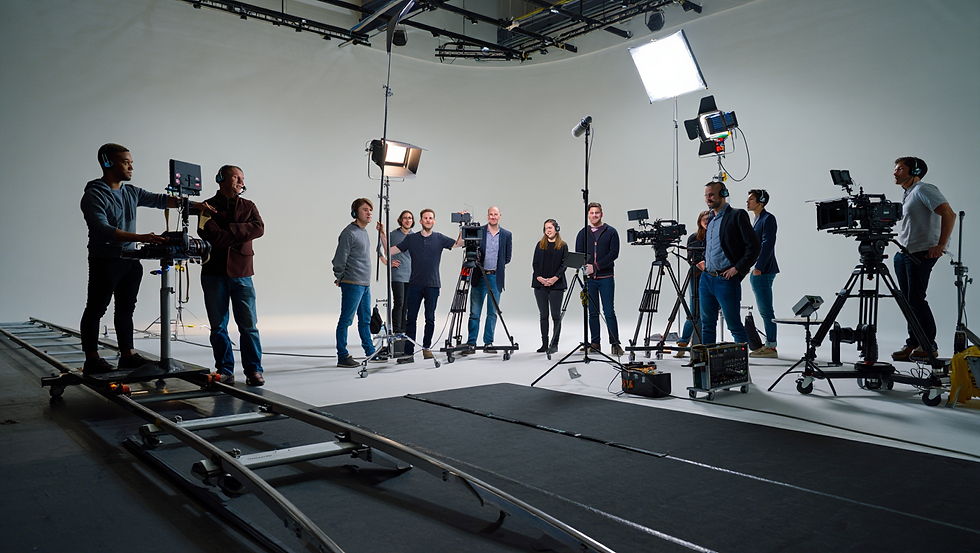
With this foundation, editors can blend material from different cities into a single piece without distracting jumps. A remark from leadership in one city can be intercut with reactions from another. A question asked in London can be answered visually with scenes from Chicago. The entire multi-city roadshow feels like one journey rather than a disconnected series of rooms.
When you rely on local crews with no central guidance, that coherent visual language is almost impossible to maintain. Each team will default to its own style. Even if every city is competently filmed, the combined effect is rarely the kind of unified leadership tour media that supports your long-term brand story.
Workflow, Turnaround And The Speed Of Recap Content
In the modern rhythm of communication, waiting a month for roadshow highlights is too slow. People want to see something soon after the event while the experience is still fresh in their minds. That is true for employees, customers and partners. It is also true for leadership teams who want to check how the message landed.
A traveling corporate event media team can build speed into the process. Because they handle roadshow video production for every stop, they develop a predictable workflow. Cards are offloaded the same way in each city. Naming conventions and folder structures stay identical. Editors may even begin rough cuts while the tour is still underway.
Quick city-specific edits can be turned around within days, or even overnight in some cases. Those short pieces help maintain momentum, build anticipation for upcoming stops and provide raw material for internal comms teams to work with across the organization.
With local crews, you usually have to wait for each vendor to process and send files in their own time and format. There is no shared system, no common schedule and no incentive to prioritize your need for fast recap video production. By the time everything arrives, the roadshow may already feel like old news.
Capturing More Than Just The Main Stage
One of the quiet advantages of a dedicated traveling videographer team is that they learn to see the tour the way your people will remember it. Yes, the main stage sessions are important. But when people talk about a corporate roadshow afterwards, they often mention the hallway conversations, the candid comments at the coffee bar, or the moment a regional manager finally asked the question everyone else had in mind.
A team that is with you from city to city can anticipate where these moments are likely to happen. They know which leaders are willing to give short reflections between sessions.

They know which employees or customers have strong stories to tell and how to approach them gently for testimonial videography. They know when to pull someone aside for a quiet piece of executive interview videography that goes beyond the scripted talking points.
Across the whole tour, these small, human scenes accumulate. When they are woven into your roadshow marketing content, they give depth and credibility to the headline messages. With ad hoc local crews, these moments are often missed because no one is thinking at the tour level. The crew is booked to “cover the event”, and once the last slide is off-screen, their job is done.
Thinking About Budget Without Thinking Short-Term
It is honest to say that a dedicated roadshow videographer and nationwide event video team will usually cost more upfront than a string of separate local bookings. Flights, hotels and coordination hours do add up. The question is whether you are buying a cost or an investment.
If your only goal is to have proof that the events happened, almost any recording will do. But if you expect your corporate roadshow to generate a library of usable footage for internal and external use, cutting corners on media rarely pays off. You may save money in the first line item and lose far more later through unusable clips, expensive fixes in post and campaign ideas that never materialize because the material is not strong enough.
By contrast, high-quality multi-city content capture keeps paying you back. Clips from this year’s tour can appear in next year’s conferences, sales meetings and onboarding flows. A powerful answer from a customer, captured cleanly, might become a centrepiece in a case study video months later. That is the kind of long-term value that rarely emerges from a pile of inconsistent footage.
When Local Crews Still Make Sense
There are situations where local teams can play a useful role alongside your core roadshow videographer. A large flagship conference stop might need extra hands for breakout rooms or workshops. In those cases, your central corporate event media team can brief and supervise local assistants, making sure they follow the agreed visual and technical standards.
This hybrid model allows you to extend your reach without losing control of the overall look and feel. The key is that the nationwide roadshow videography partner remains the creative and technical anchor. Local crews become an extension of that vision rather than independent operators doing their own thing.
Making The Call For Your Next Roadshow
In the end, the decision comes back to what you want your corporate roadshow to achieve. If you simply need a record of a few talks in one or two cities, local crews might be enough. If you are running a serious multi-city roadshow that is meant to support your brand story for months or years, a dedicated roadshow videographer and corporate event media team are far more than a nice extra. They are the difference between footage that quietly undermines your message and footage that amplifies it.
A traveling team gives you unified event videography nationwide, reliable multi-city event coverage and the kind of consistent brand content that lets you cut between cities without losing your audience. They capture not only what was said on stage but how it felt to be there. And they turn a demanding tour into a lasting asset, rather than a blur of dates on a calendar that everyone quickly forgets once the flights home are over.


Comments